


Our own local team on the ground. Dutch certified. The best of both worlds.
By hiring local guides and porters, you help them earn a good income close to home.
Financially protected through VZR Garant and the Calamity Fund.
In a nutshell
This group trek through Upper Dolpo is unlike anything else you’ll find here. Over 32 days, we cross the most remote and spiritually charged region of Nepal. It’s a vast, windswept plateau where ancient Bon monasteries cling to cliffsides, yak caravans still follow thousand-year-old trade routes and the sky seems closer than anywhere else on earth. It’s wild.
The journey begins with a bus ride and a flight: first from Kathmandu to Nepalgunj, then from Nepalgunj to the tiny Juphal airstrip deep in western Nepal. From there, the trek begins. The trail climbs through pine forests and river gorges to Phoksundo Lake, a glacial body of water so impossibly blue it looks painted. 😍
Then we head deeper. Over the Kang La Pass into the hidden world of Upper Dolpo. Through Shey Gompa, the ancient Crystal Mountain monastery. Across seven(!) passes above 5,000 m / 16,500 ft in total. 😎 Each one harder and more beautiful than the last. The villages we pass through, Namgung, Tinje and Chharka, are among the least visited in all of Nepal. Some see fewer than a handful of outsiders each year.
The trek ends not in a teahouse but in Jomsom, Mustang. Here we take a jeep to Pokhara and eventually back to Kathmandu.
This is a camping trek. We bring tents, cooking equipment and supplies. There are no teahouses on most of this route. That is not a drawback. It is the point. It’s a special adventure.




No. This trek in Upper Dolpo is one of the most demanding treks in Nepal. The route crosses 6 passes above 5,000 m, spends multiple nights above 4,500 m and covers remote terrain with no teahouses or emergency facilities. Extensive prior high-altitude trekking experience is essential.
Not sure if this is for you? Get in touch and we will give you an honest answer.
Yes. This is a full camping trek throughout. Our team brings tents, sleeping equipment, cooking gear and all food supplies. There are no teahouses on most of this route. That is part of what makes it so extraordinary, and so demanding.
During this Upper Dolpo Trek you cross 7 passes above 5,000 m / 16,500 ft:
- Kang La Pass (5,240 m / 17,192 ft)
- Shey La Pass (5,200 m / 17,060 ft)
- Muri La Pass (5,030 m / 16,503 ft)
- Choi La Pass (5,051 m / 16,572 ft)
- Jhyargo La Pass (5,378 m / 17,644 ft)
- Mola Pass (5,030 m / 16,503 ft)
- Junbeni Pass (5,550 m / 18,209 ft)
📽️ Nepal's most famous film was made here
In 1999, the film "Himalaya", also known as "Caravan", became the first Nepalese film to be nominated for an Oscar. It was shot entirely in Upper Dolpo and tells the story of a traditional yak caravan crossing the high passes into Tibet. Walking this route, you follow the same trails the film was made on.
Pricing & Dates
The price of the Upper Dolpo Group Trek is per person, based on sharing twin rooms and tents.
Prefer your own hotel room in the cities? The single room surcharge is 145 euro.
Included in this trip
- Airport transfer (arrival and departure)
- Comfortable hotel in Thamel, Kathmandu (including breakfast) – 4 nights
- Group dinner on the day of arrival
- Pre-trip meeting and briefing in Kathmandu
- All required trekking permits
- Licensed, English speaking trekking guide (salary, transport, accommodation, meals, gear and insurance)
- Local mountain porter (salary, transport, accommodation, meals, gear and insurance)
- Domestic flight from Kathmandu to Nepalgunj, and from Nepalgunj to Juphal, Dolpa
- Comfortable hotel in Nepalgunj (including breakfast) – 1 night
- Tented camp during the trek (tent, mattress, kitchen equipments) – x nights
- Breakfast, lunch and dinner during the trek

- Jeep from Jomsom to Pokhara
- Comfortable hotel in Lakeside, Pokhara (including breakfast) – 1 night
- Bus from Pokhara back to Kathmandu
- 24/7 support from the By Mountain People team throughout your trip
- Booking secured through the Calamity Fund
- Booking secured through VZR Garant
- VAT and tourist service charge

Not included
- Any hot and cold drinks
- Insurance covering rescue and evacuation
- Tips
- All other expenses not listed under 'Included'
| Date | Availability | Participants | Price p.p. | |
|---|---|---|---|---|
| Sat, 2 Oct 2027 | Available | from 6,700 EURO | Join this group |
Day-to-day program
This page shows you how the Upper Dolpo Group Trek is structured, day by day.
Note: walking times are indicative and depend on the walking pace.
You arrive in Nepal. A transfer takes you to the hotel in Thamel. The drive takes about 30 minutes, depending on traffic.
In the evening, the group comes together for dinner. A great moment to meet each other and get to know one another.
Welcome to Nepal! 🙏🏽


Hopefully you had a good first night and recovered a bit from the journey to Nepal.
After breakfast, we have our pre-trip meeting. We go through the itinerary together and check your gear. Missing something? Your guide will take you to the outdoor shops nearby to get everything sorted.
Got everything you need? Take the rest of the day to recover from the jetlag, explore Thamel or venture a little further into the city.


Sightseeing
Want to go for a small walk in the afternoon? Here are some ideas on walking distance from your hotel.

Swoyambhunath Stupa
Also known as the Monkey Temple, Swayambhunath sits on a hilltop about 20 minutes west of Thamel. The climb up the stone staircase is steep, but the reward is a panoramic view over Kathmandu and a stupa surrounded by dozens of resident monkeys. The all-seeing eyes painted on the tower watch over the city from every angle. One of the oldest religious sites in Nepal, revered by both Hindus and Buddhists.

Kathmandu Durbar Square
About 15 minutes on foot from Thamel, Kathmandu Durbar Square is the historic heart of the old city. The square was the seat of the Malla and Shah kings for centuries and is still used today for religious ceremonies, including those of the Kumari, the living goddess whose residence is located within the complex. The temples, courtyards and wooden carvings date back to the 15th and 16th centuries. Some structures are still being restored after the 2015 earthquake, but the square remains one of the most compelling places in the city. Walk there from Thamel and take the back streets: the journey is half the experience.
We take an early flight from Kathmandu to Nepalgunj, a bustling town in the western Terai. The south of Nepal. It’s hot, flat and alive with colour. A world away from what is coming. We spend the night here, ready for the early morning flight tomorrow.
An early morning flight from Nepalgunj to Juphal, a short airstrip surrounded by mountains. The moment the plane lands, the remoteness is palpable. We meet our camping crew and porters, load the bags and begin walking to Dunai, the administrative centre of the Dolpa district.
The trek begins in earnest. We follow the Suli Gad river upstream through pine forest and small settlements. The valley narrows as we climb. Chhepka is a quiet settlement at the edge of wilder terrain.
We continue upstream through increasingly dramatic gorges. Waterfalls appear on the cliffs above. The forest deepens. Saijol is a small settlement where the outside world feels very far away.

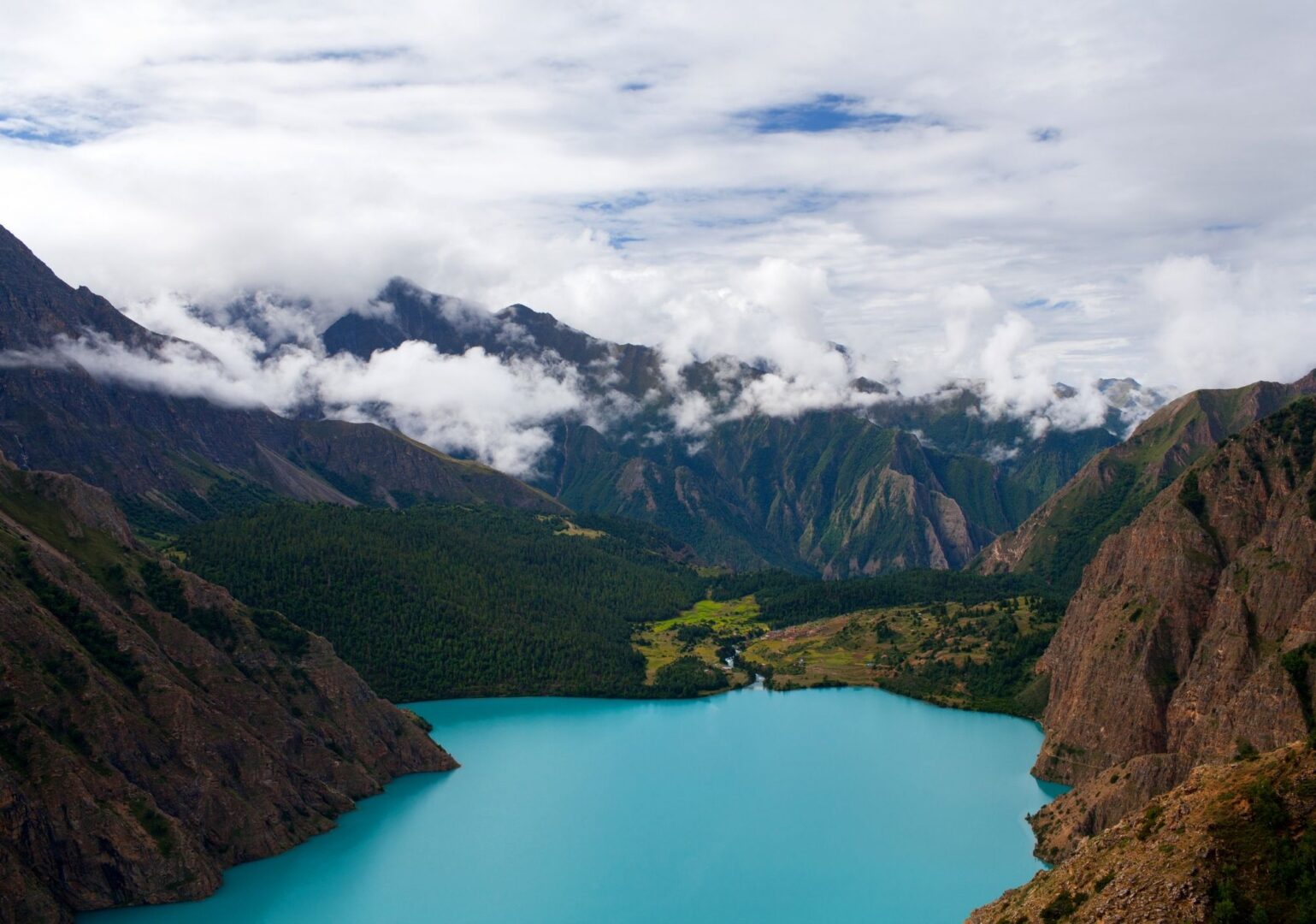
A shorter day with an extraordinary ending. The trail rounds a ridge and Phoksundo Lake appears below, a vast body of impossibly turquoise water set against bare rock walls and the first snow. Nepal’s deepest lake. Nothing can prepare you for it. We camp near Ringmo village.

We have a full day by the lake. Visit the ancient Bon monastery above the village, walk to the waterfall at the lake’s edge or simply sit and watch the light move across the water. The altitude here is real. Rest is not optional.
🏔️ Phoksundo is the deepest lake in Nepal
Phoksundo Lake has no surface outlet stream. The water drains entirely through underground channels. It was formed thousands of years ago when a massive landslide dammed the river, creating a natural basin. At 145 metres deep, it is Nepal's deepest alpine lake, and its colour comes from its remarkable mineral content rather than algae or aquatic life.
We leave the lake behind and follow the Phoksundo Khola river north into wilder terrain. The landscape strips back to rock and sky. Sallaghari is a basic camp at the edge of the high plateau.
A long, steep climb to the camp below the Kang La Pass. The air thins noticeably. Above us, the first great pass of the trek. We eat early, rest and prepare. Tomorrow demands everything.
Up before dawn. The climb to Kang La is steep and exposed. Loose rock, thin air, views that grow with every step. At the summit, the entire Upper Dolpo plateau unfolds below. The descent to Shey Gompa is long but extraordinary. Shey Gompa, known as the Crystal Mountain monastery, is one of the most sacred sites in all of Dolpo. We spend two nights here.
A day to explore and breathe. The monastery complex is ancient and still active. Monks live and practice here year-round. Walk up to the Crystal Mountain viewpoint, visit the caves above the gompa or simply sit in the courtyard and let the silence do its work.
🙏🏽 The Crystal Monastery
Shey Gompa was established in the 11th century and serves as the spiritual heart of Upper Dolpo. The mountain above it, the Crystal Mountain, is considered a younger brother of Mount Kailash in Tibet. Every twelve years, in the Year of the Dragon, pilgrims gather here for the Shey Festival. It's a tradition that has been observed since the 12th century.
The second pass. The Shey La is demanding after days at altitude but shorter than the Kang La. On the other side, the trail descends to Namgung Gompa — a monastery built directly into a cliff face, one of the most dramatic sights of the entire trek.
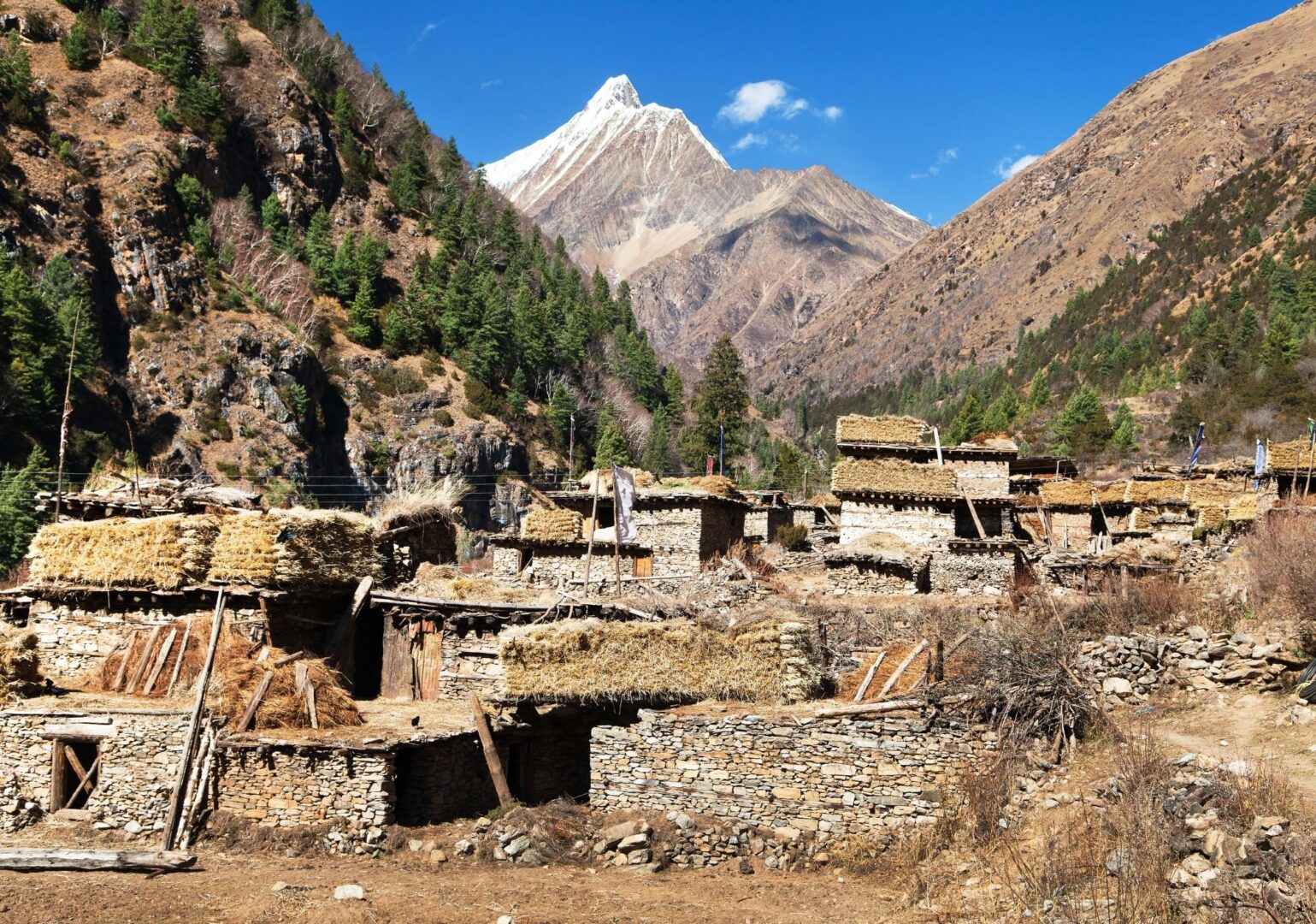
We descend from the monastery and follow the trail through remote valleys to Saldang, one of the largest villages in the Dolpo region. Stone houses, prayer flags and people who have lived here for generations with almost no contact with the outside world.
🙏 Bon: the religion that predates Buddhism
Dolpo is the only place in the world where collective settlements of Bon practitioners still exist. Bon is older than Buddhism. An animist tradition that sees spirits in mountains, rivers, animals and plants. In the Bon dialect, a sacred chant translates as: "We are guardians of nature." The monasteries along this route are among the last living examples of this ancient tradition.
We climb again, passing through Yangjer Monastery on the way to Musi Village. It’s one of the last settlements before the Tibetan border. The views here are vast and the silence is total.
🐆 The snow leopard's territory
Upper Dolpo has one of the highest concentrations of snow leopards in the Himalaya. In 1973, naturalist George Schaller explored Upper Dolpo specifically to study the rare Himalayan blue sheep and its main predator, the snow leopard. This journey was later documented by Peter Matthiessen in his book The Snow Leopard. The animals are still here. You have a real chance of seeing one.
The third pass today. The Muri La is a long approach across open plateau before the final climb to the summit. The descent to Simen is steep and rewarding.
Three passes crossed. Three more to go! 💪

A shorter day through wide, open terrain. The landscape here is unmistakably trans-Himalaya. Dry, vast and almost lunar. Tinje is a traditional village with a monastery.
🧂 The last yak caravans
The Dolpo-pa have lived in these valleys for around 1,000 years. The food they grow is only enough to sustain them for half the year. The key to their survival is the yak caravan. Trading grain for salt from Tibet, then taking the salt south to trade for more food. On this trek, you can encounter these caravans on the trail. A way of life that has barely changed in a millennium.
We leave the village behind and climb steadily to the high camp below the Choi La. The nomad camps along the way are a reminder that this plateau has been home to herders for centuries.
Tomorrow is another pass day.
The fourth pass! The Choi La is challenging but the views from the summit are extraordinary. The descent to Tokyu winds through pastureland and high meadows where yaks graze in silence.
A relaxed day through open terrain. We move at a gentler pace, following the trail through wide valleys with big skies. A good day to look around and take it all in before the next push.
The fourth pass and the second highest of the trek. The Jhyargo La is a serious crossing. A long approach, a demanding summit and a descent to the yak pastures of Yak Kharkha. Camp tonight in the open at nearly 4,800 m.
Today’s the day of the fifth pass. We cross the Mola and descend to Chharka Bhot, a village that marks the end of the most remote section of the trek. We spend two nights here.
This is a day to explore Chharka and its Bon Buddhist monastery. Or, we can visit the caves above the village, talk to the monks or simply walk the surrounding hills. The hardest section is behind us. Your body deserves a full day of rest.
We leave Chharka and follow wide, flat trails upstream. Streams and nomad camps appear along the way. The terrain is raw and open. Camp tonight at Molumsumna, high on the plateau.
Today’s we cross the sixth and highest pass of the entire trek. The Junbeni Pass demands everything the previous weeks have been building towards. At 5,550 m, the views stretch beyond anything we have seen so far. The descent to Ghaldeng Ghuldung is steep and long. We made it!
Congrats! Six passes crossed. The full Upper Dolpo traverse is complete. This is something very few people in the world have ever done. 💪
The landscape begins to shift. We are entering the Mustang region now. It’s drier, more open, with the distinctive red and ochre cliffs that characterise this part of Nepal. Sangda is a traditional Tibetan village where the culture feels as old as the mountains.
We continue descending through rocky terrain and wide valleys. The Annapurna and Dhaulagiri ranges appear on the horizon. After weeks in the remote west, familiar peaks feel like old friends.
Today is our final walking day.
We follow the Kali Gandaki river, the deepest gorge on earth, south to Jomsom. The wind picks up in the afternoon, as it always does here. Tonight we sleep in a teahouse for the first time in weeks.

Early morning we board a jeep to Pokhara. To a hot shower and a soft bed.
We catch the bus back to Kathmandu. In the evening, a well-earned dinner together. A toast to this extraordinary adventure and the people we shared it with.


A free day in the city. It’s a great opportunity for sightseeing. There’s so much to explore! Or pick up souvenirs or find a quiet corner in one of the many restaurants nearby.
Sightseeing in Kathmandu
Kathmandu is an ancient city with many UNESCO World Heritage Sites. Want to explore the city today? Here are some ideas.

Bhaktapur Durbar Square
About 13 km east of Kathmandu lies Bhaktapur, a medieval city that feels like it has barely changed in centuries. The Durbar Square is also a UNESCO World Heritage Site and home to the Palace of 55 Windows, the five-story Nyatapola Temple and the ornate Golden Gate. Behind the square, Pottery Square is still a working craft centre where local artisans shape clay by hand, just as they have done for generations.

Boudhanath Stupa
One of the largest Buddhist stupas in the world and a UNESCO World Heritage Site. Boudhanath is the spiritual heart of the Tibetan community in Kathmandu. Walking the kora, the circular path around the stupa, alongside monks, pilgrims and locals is an experience that stays with you. The whitewashed dome, the prayer flags and the steady hum of chanting make this place unlike anywhere else in the city.

Pashupatinath Temple
The holiest Hindu temple in Nepal, dedicated to Lord Shiva in his form as Pashupati, protector of animals. The temple complex sits on the banks of the sacred Bagmati River, about 5 km from Thamel. Non-Hindus cannot enter the main temple, but the surrounding complex is open to all. From the eastern bank of the river, you can watch the cremation ghats and the daily rituals that have taken place here for centuries.
If this is the final day of your trip in Nepal, your international flight departs from Tribhuvan International Airport in Kathmandu.
Goodbye friends! We hope you will cherish the memories we’ve made together forever. And see you on the next adventure! 🙏🏽

Walking & pace
We usually start the day early. Breakfast is at 6:00 AM on the big pass days, 7 AM on the others. We leave camp as soon as it is packed, as the high passes demand early starts and the morning air is clearest before the wind picks up.
On a camping trek in Nepal, the rhythm is different from a teahouse trek. There is no dining room to linger in. Lunch is prepared by the kitchen crew at a sheltered spot along the trail. So it’s hot food, a rest, then back on the trail. By late afternoon, the camp is already set up ahead of us. Tents pitched, dinner on the way.
The evenings in Dolpo are extraordinary. No light pollution, no village sounds. Just the mountains, the wind and a sky full of stars. We go to bed early for another day of Dolpa tomorrow.
Route

Altitude

About the Upper Dolpo Trek
This group trek in Upper Dolpo is one of the most demanding and remote trekking expeditions in Nepal. We walk an average of 6 to 7 hours per day over 23 trekking days, crossing 6 passes above 5,000 m. The highest overnight camp is at Rapka at 5,550 m / 18,209 ft. The highest pass is the Jungben La at 5,550 m / 18,209 ft.
This is a full camping trek. There are no teahouses on most of the route. Our kitchen crew carries everything needed to feed and shelter the group throughout. Prior high-altitude trekking experience is essential. This trek is not suitable for beginners.
Quick facts
- Route type: point to point
- Starting point: Juphal (2,320 m / 7,612 ft)
- Highest point: Jungben La Pass (5,550 m / 18,209 ft)
- End point: Jomsom (2,700 m / 8,858 ft)
- Number of trekking days: 23
- Number of high passes: 7
- Accommodation: camping throughout
- Highlights along the way:
- Phoksundo Lake
- Shey Gompa
- Namgung Gompa
- Musi Village
- Jungben La Pass
- Kali Gandaki Valley
Practical
Everything you need to know before you go. Below you’ll find answers to the most frequently asked questions about this group trek. Can’t find what you’re looking for? Feel free to reach out.
Yes. The Upper Dolpo region requires a restricted area permit in addition to the Shey Phoksundo National Park permit. Both are included in the trip price and arranged by us before departure.
This trek spends extended periods above 4,000 m and crosses 6 passes above 5,000 m. Multiple rest days are built into the itinerary to aid acclimatisation. Your guide is trained to recognise altitude sickness symptoms. Always communicate how you feel. Descent is the only reliable cure.
Yes, that is possible at an extra cost. Find the applicable rate on the “Pricing and dates” tab.
During the trek, everyone sleeps in individual or shared tents. Tent arrangements can be discussed when booking. In Kathmandu and Nepalgunj private rooms are always available.
Minimum 2, maximum 10 people.
We keep our groups deliberately small on this route. The remote terrain and logistical complexity of a camping expedition mean that a smaller group moves safer, faster and with less impact on the fragile environment. Get in touch for current group sizes and availability.
A high-quality sleeping bag rated to at least minus 20 degrees Celsius is essential. Warm layers, waterproof outer shells, trekking poles and sturdy boots are all required.
We provide a detailed gear list with every booking. Rental gear is available in Kathmandu if needed.
Nepal Group Trek – Upper Dolpo
- Trek through Upper Dolpo, one of Nepal's most restricted and least visited regions
- Cross six high passes of above 5,000 m through raw landscapes
- Phoksundo Lake, Shey Gompa and ancient Bon monasteries


Group Trek – Nar Phu Valley
View this trip
Group Trek – Manaslu Circuit
View this trip
Excited to explore Nepal?
Now let's make it real. Browse our trips or request a quote. We are a small Nepal trekking company, so you will hear from us personally ASAP.

